
Tech-tonic Chronicles #28: Evolution of AI, Agents in 2025
A Year in Review: Tech-tonic Chronicles Wrapped 📦

Hello Chronic(le) Readers,
I love this time of year. There is something about December - the festive lights, the holidays, the whole world winding down. But what I really love about December is the “reflection”. This is usually the moment when I look back at last year’s predictions - what landed, what didn’t, and what surprised us along the way.
In normal years, this kind of reflection fascinated me. But let’s be honest - 2025 was anything but normal. Between geopolitical realignments, macroeconomic turbulence, and the sheer velocity of AI innovation, the year felt like a constant whirlwind.
In my previous life as a strategy & OKR consultant, this was the season of Retrospectives. I would gather CXOs and senior leaders in a room to pause, reflect on what went well, what failed, and decided where their future bets truly belonged.
This newsletter is one such retrospective - let’s call it “Tech-tonic Chronicles Wrapped”?. It is an attempt to trace the journey that brought us here. As I look back across the previous editions of Tech-tonic Chronicles - the questions we asked, the ideas we explored, and the experiments we ran, I can see 5 distinct phases of evolution taken shape.
Note: The content and opinions shared in this newsletter are entirely my personal views and do not reflect the position or viewpoints of my organization.
Phase 1: Bot vs. Agent (The Era of the Solo Doer)
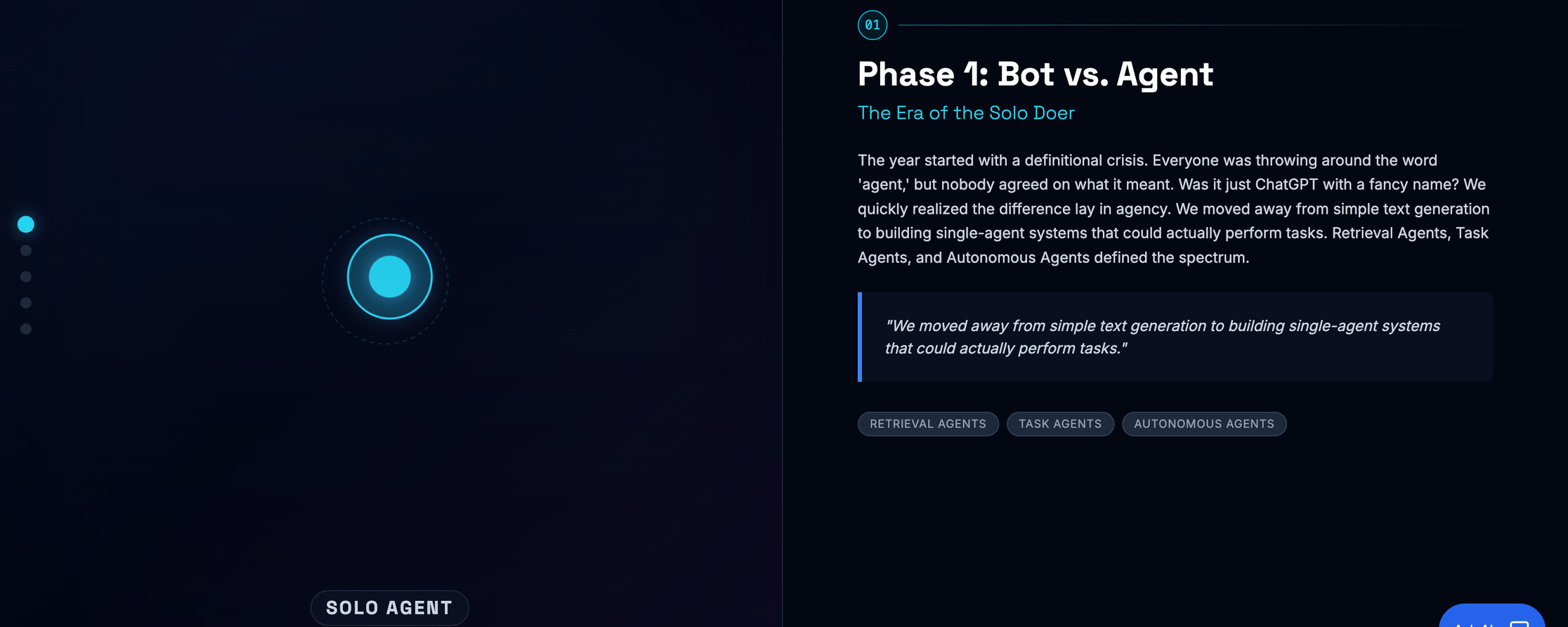
At the start of the year, we faced a definitional crisis. Everyone was throwing around the word “agent,” but nobody agreed on what it meant. Was it just a smarter chatbot?
We quickly realized the difference lay in agency. We defined the spectrum early on: moving from simple Retrieval Agents (that just read stuff) to Task Agents (that do stuff). We didn’t just talk theory; we built a “Retail Data Detective“ that could handle customer complaints and log tickets via Zapier without us lifting a finger.
It was impressive, but looking back, it was rudimentary. We were essentially connecting APIs to a single agent.
Phase 2: Equipping the Workforce (Tools, Protocols, and Memory)
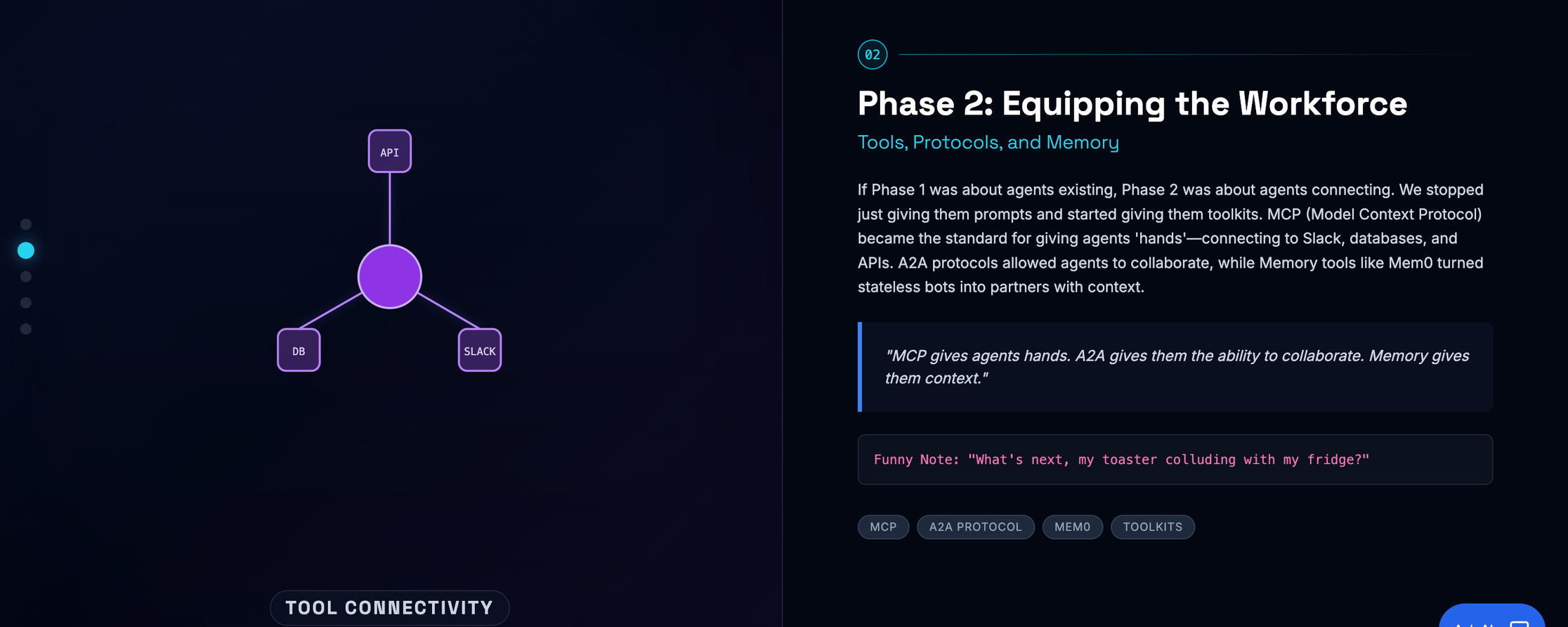
We realized that for these single agents to be truly useful, they needed better equipment. We stopped just giving them prompts and started giving them toolkits.
We explored the “alphabet soup” of protocols (no pun intended) that became the connective tissue for this new workforce. MCP (Model Context Protocol) became the gold standard for giving agents “hands,” allowing them to securely access tools like Teams, Slack and local files. We even watched the A2A (Agent-to-Agent) protocol allow a Google finance agent to seamlessly collaborate with a Microsoft writer agent - a true “Avengers assemble” moment for tech interoperability. And Computer Use Agents (CUA) that can browse web like humans to do deep research work.
Memory also played a key role. We realized that stateless bots are amnesiac colleagues. By implementing tools like Mem0, we turned agents from forgetful task-doers into partners that actually remembered our preferences across sessions.
Phase 3: The Coding Agent Breakout (From Assistant to Autonomy)
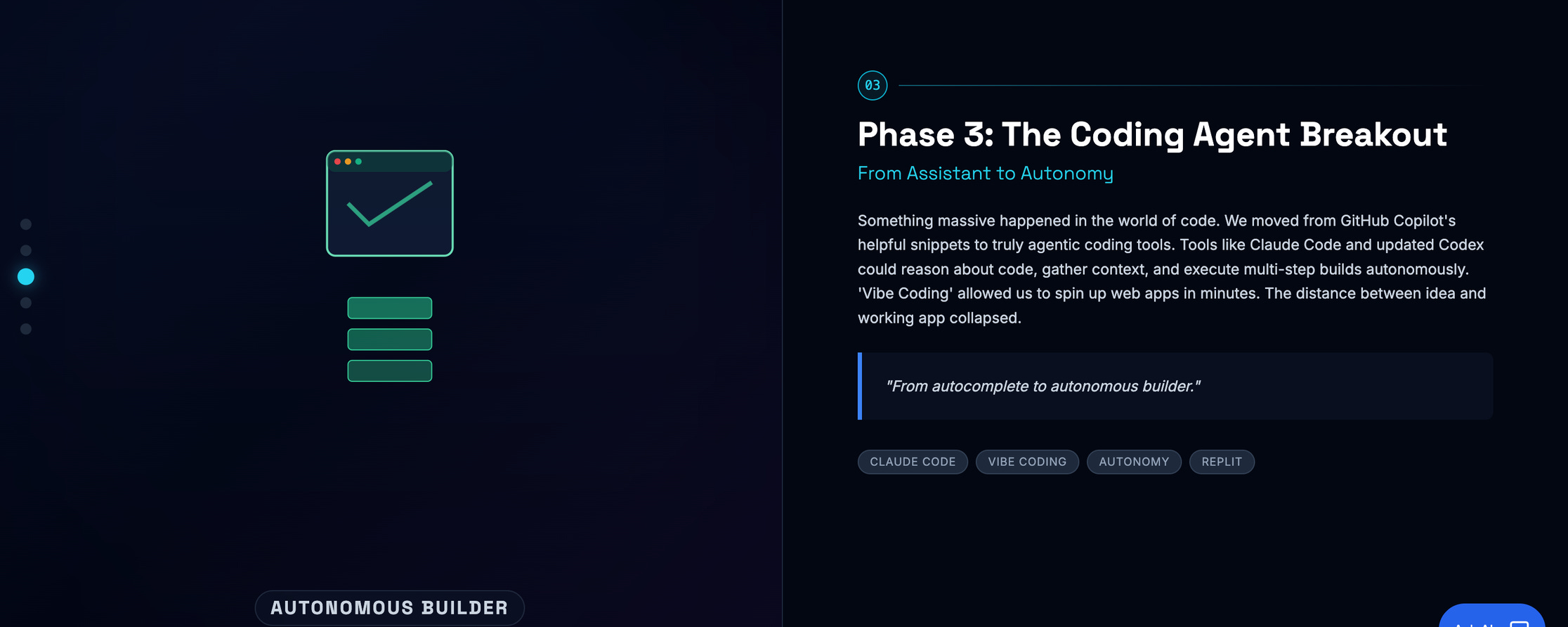
Parallel to all this, something massive was happening in the world of code. We started the year with helpful assistants like GitHub Copilot and Codex, but they were largely just offering snippets of code that we incorporated into our IDE. Then came the explosion. Tools like Bolt and Replit let us build simple apps with backends, but the real breakthrough - at least in my eyes - was the emergence of truly agentic coding tools like Claude Code and the renewed Codex CLI.
We witnessed this power firsthand when we used OpenAI’s Codex CLI to build a full sales analysis web app directly from the terminal, writing zero lines of code ourselves. Later, we embraced “Vibe Coding” spinning up a working Azure AI web app in 10 minutes using VS Code and Python, bypassing expensive packaged subscriptions entirely.
Phase 4: Hitting the Wall & The Multi-Agent Pivot
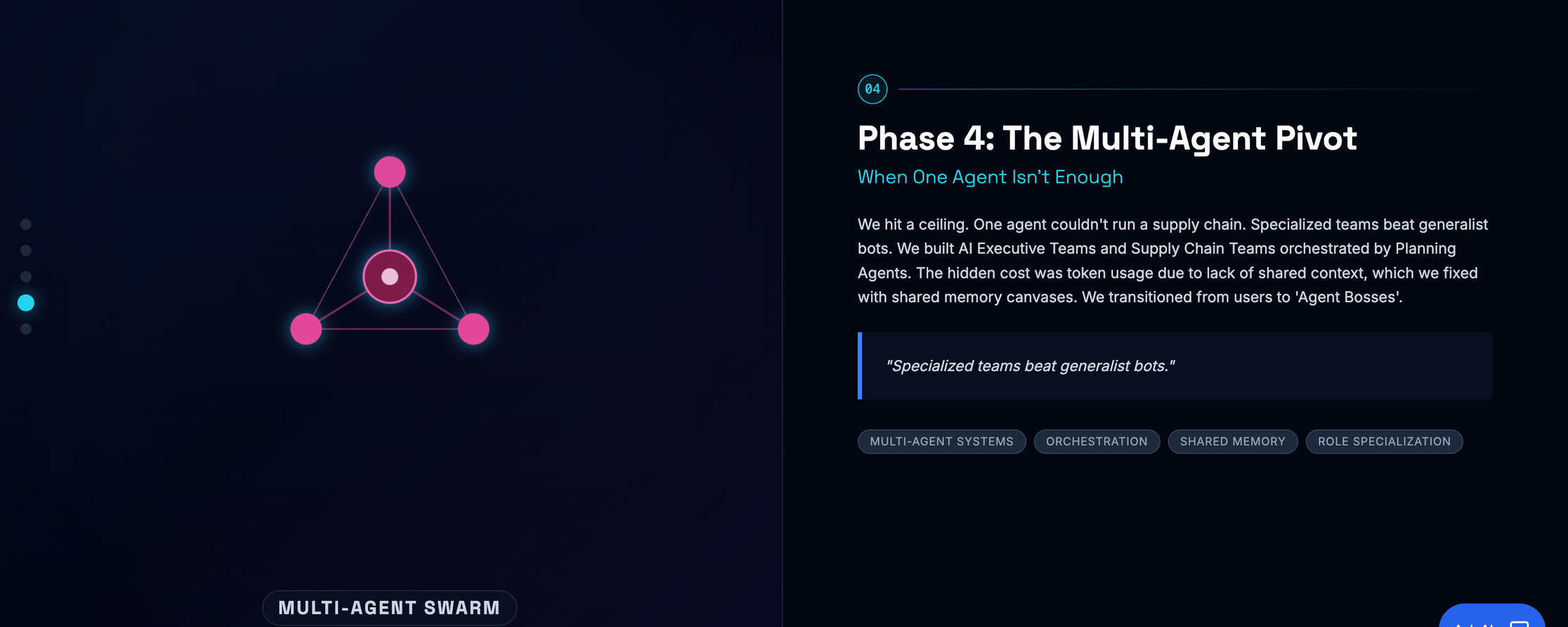
Despite these wins, we hit a ceiling. One agent, no matter how smart or well-equipped, couldn’t run a supply chain. It couldn’t balance quality, cost, and logistics all at once.
That was our pivot to Multi-Agent Systems (MAS). We realized that specialized teams beat generalist bots.
We built a Supply Chain Team where a “Procurement Agent” negotiated costs while a “Quality Agent” ensured standards, orchestrated by a central planner.
We created an “AI Executive Team“ for presentation prep, where researchers, writers, and critics collaborated on a shared canvas to build strategy decks.
We explored Magentic-UI and the Microsoft Agent Framework, moving from experimental group chats to production-grade orchestration where we acted as the “Agent Boss”.
Phase 5: The Human Element (Adoption & Value)
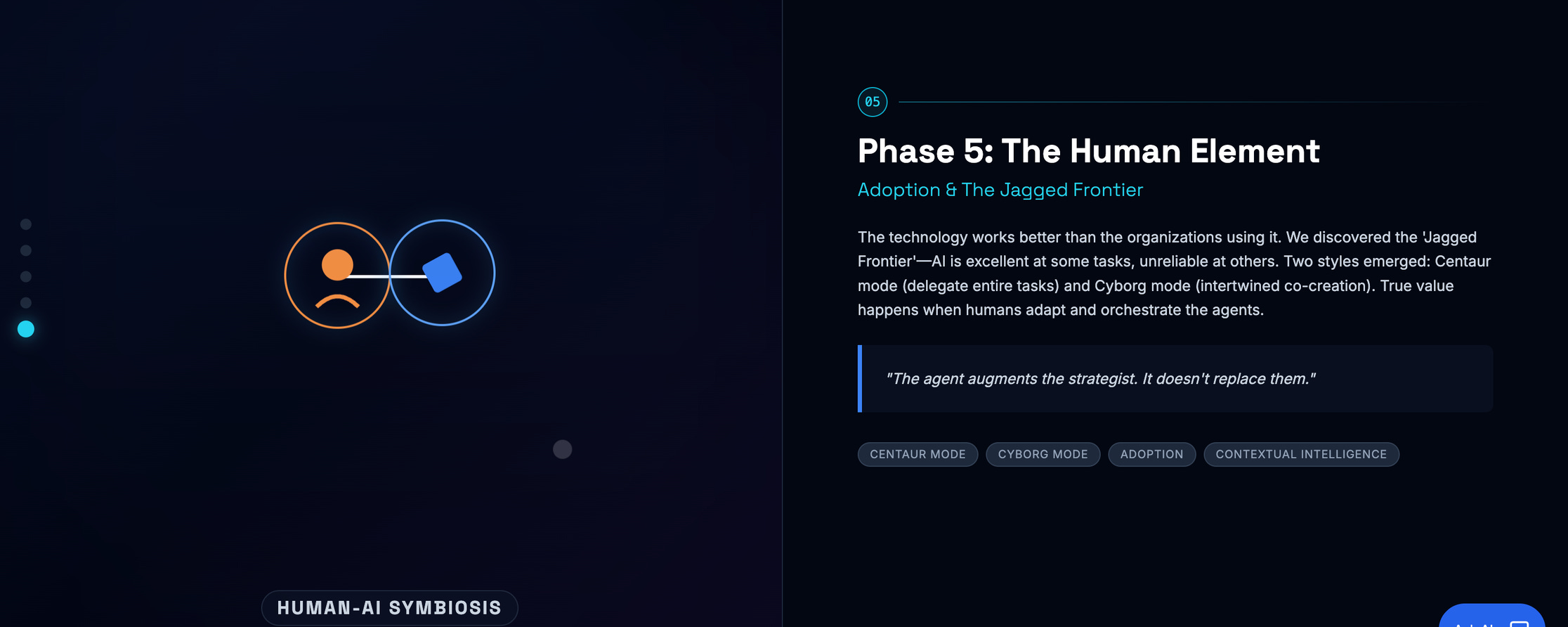
In the final phase of the year, we asked the hard questions: The technology is ready, but are we?
We looked at why 95% of AI pilots stall and realized it’s usually because of Outdated Workflows trying to shove new AI into old processes. We learned that true value: GDP-level impact only happens when humans adapt.
We discovered the “Jagged Frontier” of adoption, identifying that successful teams are a mix of Centaurs (who delegate tasks completely) and Cyborgs (who weave AI into their workflow).
And finally, we arrived at the Holy Grail: Contextual Intelligence. In our deep dive into Personalized GTM, we saw what happens when you combine everything: memory, orchestration, and data to create a system that truly “knows” the customer.
⛵ Conclusion: The Sailboat Retrospective (2025 Edition)
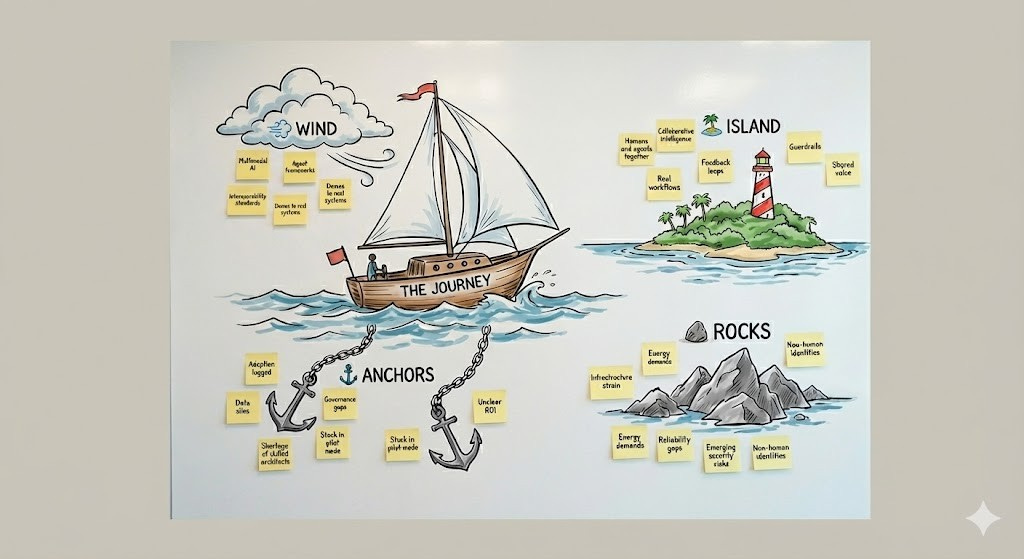
In my consulting days, I often ran Sailboat Retrospectives—picture the journey as a boat and ask: what pushed us forward, what slowed us down, what risks lay ahead, and where are we headed? Applying that same lens to everything we learned about AI and agents in 2025, a clear picture starts to emerge.
💨 Wind (forces accelerating progress): Multimodal AI, maturing agent frameworks, and interoperability standards finally gave us the foundation to move from demos to real systems.
⚓ Anchors (current constraints holding us back): Adoption lagged. Data silos, governance gaps, unclear ROI, and a shortage of skilled architects kept many efforts stuck in pilot mode.
🪨 Rocks (future risks and hazards to navigate): Infrastructure strain, energy demands, reliability gaps across the jagged frontier, and emerging security risks around non-human identities.
🏝️ Island (the destination we’re aiming for): A future of collaborative intelligence—humans and agents working together inside real workflows, with guardrails, feedback loops, and shared value.
I hope this resonated with you and sparked a few reflections of your own. I would love to hear how you are thinking about the year gone by and what you are carrying into the next. Wishing you all a very happy, healthy, and reflective New Year.

As a side note, I really enjoy this annual prediction exercise by Prannoy Roy & Ruchir Sharma, where they revisit their calls from the previous year before laying out what they see coming for next year (
).
I realy appreciate your take on 2025 feeling like a "constant whirlwind" due to the sheer velocity of AI innovation; it captured the essence of trying to stay current while simultaneously teaching new paradigms like the bot-agent distinction.